In a world of endless X posts and constant TikTok updates, it can feel like you have to post constantly to be heard. Here’s a hot take: More is not always better. Paying close attention to successful content, audience interactions, and social media posting frequency can make all the difference.
Finding the right metrics can be tricky. How do you know what actually matters in today’s social media space? It’s a valid question, and there isn’t just one answer. The truth is that more is not always better, and guesswork is not a recipe for success. Most publishing teams are a skeleton crew and don’t have the resources to post content 24/7.
So what do you do? Let’s start with some basics.
Over-posting and guesswork don’t lead to results.
You and your team (and the industry at large!) likely have many preconceived notions about the algorithm and what “works” on social media. Some of it is valid, but much of it is likely false.
Here are some hard truths our experts have uncovered over the years here at True Anthem.
You don’t need to post as often as your competitors do
At the risk of sounding flippant, you really don’t need to keep up with your competitors. There are way too many variables at play to use your competition as a guide for your social media posting frequency. Trying to keep up with an artificial pacing guideline can lead to:
- Lower quality content: If you simply cannot produce more content well, don’t. It will likely lead to a decline in quality, harming your brand.
- Burned-out staff: If your team is producing content at their max capacity, forcing them to create more will not work. Not only will there be more errors and less care taken with each post, but you’ll likely experience a higher turnover rate. Take care of your team and they’ll take care of you.
- Audience oversaturation: Your audience would rather see a handful of high-quality, well-targeted posts than a deluge of low-quality, uninteresting content.
The answer is to produce as much high-quality content as your staff can, and then get it to the right audience at the right time. It is always worthwhile to conduct an honest evaluation of your capacity and needs as a starting point. From there, you can begin to make decisions about pacing, timing, recirculation needs, and other factors.
More posts do not always mean more traffic
The idea of fewer posts resulting in more traffic seems counterintuitive at first, but the idea is simple: More posts only work if they resonate with your audience. A lot of misfires will have the opposite effect! You don’t want to oversaturate the feed, or you’ll start to lose your readers. Don’t cannibalize your own posts!
Instead, a smaller number of well-curated posts will keep the right people engaged and travel a lot further. Who doesn’t want to do more with less? This will preserve your team’s sanity, serve your audience well, and represent your brand well.
Some things to consider when deciding on your post volume:
- How much content do you actually produce?
- How many posts can you comfortably be responsible for creating?
- How many social channels have you committed to?
- Are you generating unique social content?
- Are your current social efforts meeting your expectations?
Weighing your content production capacity against your social media goals can go a long way in helping you figure out how to set a posting volume that will ensure your success.
Posting overnight or on weekends is not a fruitless endeavor
Old-school social media practice said you should only post when your people are online. There is value in concentrating certain posts when your audience is online, but don’t sleep on off-hours posting! There are several reasons why posting at non-peak hours makes a lot of sense.
- If you’re a news organization, news is not confined to peak social media hours. You could be missing many opportunities by restricting your posting times. Don’t be late to a story because it didn’t happen during office hours!
- Fewer people post in the evenings and on weekends, so feeds tend to be less cluttered, and you won’t have as much competition for space.
- This is the perfect time for recirculation! If something did well on Thursday afternoon and isn’t extremely time-sensitive, recirculating on Friday night or Saturday could be a great way to get another set of eyes on it.
- It’s likely that your audience scrolls before work/after work/at their kid’s game on Saturday morning. Know your audience’s habits and adjust to their preferences, not to conventional social media wisdom.
The truth is, there are many opportunities to post on nights and weekends. Take some time to understand your audience’s patterns and find a way to recirculate your content that uses all your social media real estate effectively.
Every article shouldn’t automatically be promoted on every platform
Automatic promotion shouldn’t be a rule. Let us explain.
Every platform has a unique audience. Therefore, the content for each platform should be slightly different to serve each platform. However, some stories might not fit a particular platform or audience. Or maybe the format of the content doesn’t work (A long-form text piece on TikTok, for example). Packaging a story in multiple ways is the best way to share content across platforms.
Reality, though, means that lower-volume platforms may not require every post. You may not need to make a TikTok or Reel for every article that comes through. Or maybe a particular series only exists in video format on Instagram or TikTok and doesn’t fit on Facebook. Don’t force it!
The goal should be that every piece of content that goes out makes sense for the platform’s audience.
How do you move forward?
Get to know your audience really well. Understand which content performs (and why!). Know which platforms resonate with your content. From there, you get to the fun part: execution.
Set up smart scheduling + testing
Once you have the results, you can move forward! True Anthem will help you pace your content appropriately, set up smart testing to ensure continued success, and identify the best content at the right time.
Adjust based on engagement metrics
Based on your new information, you’ll be able to optimize your posting and content. Increases or decreases can be made accordingly. Maybe you should rethink how you present your content through images and copy. Or maybe you add or abandon a social platform entirely!
Additionally, social media success is a constantly moving target. Whether the algorithm adjusts, audience tastes shift, or your goals change, chances are you can’t do the same thing for very long. You’ll need to constantly evaluate what is working, why, and whether or not you are meeting your goals.
For example, this could mean increasing or slowing down content production based on your content staff. Maybe you’ll need to offset a light news cycle by boosting evergreen content. Posting cadence adjustment is an ongoing process that will help ensure your content distribution channels are serving you well.
We’ve got your back
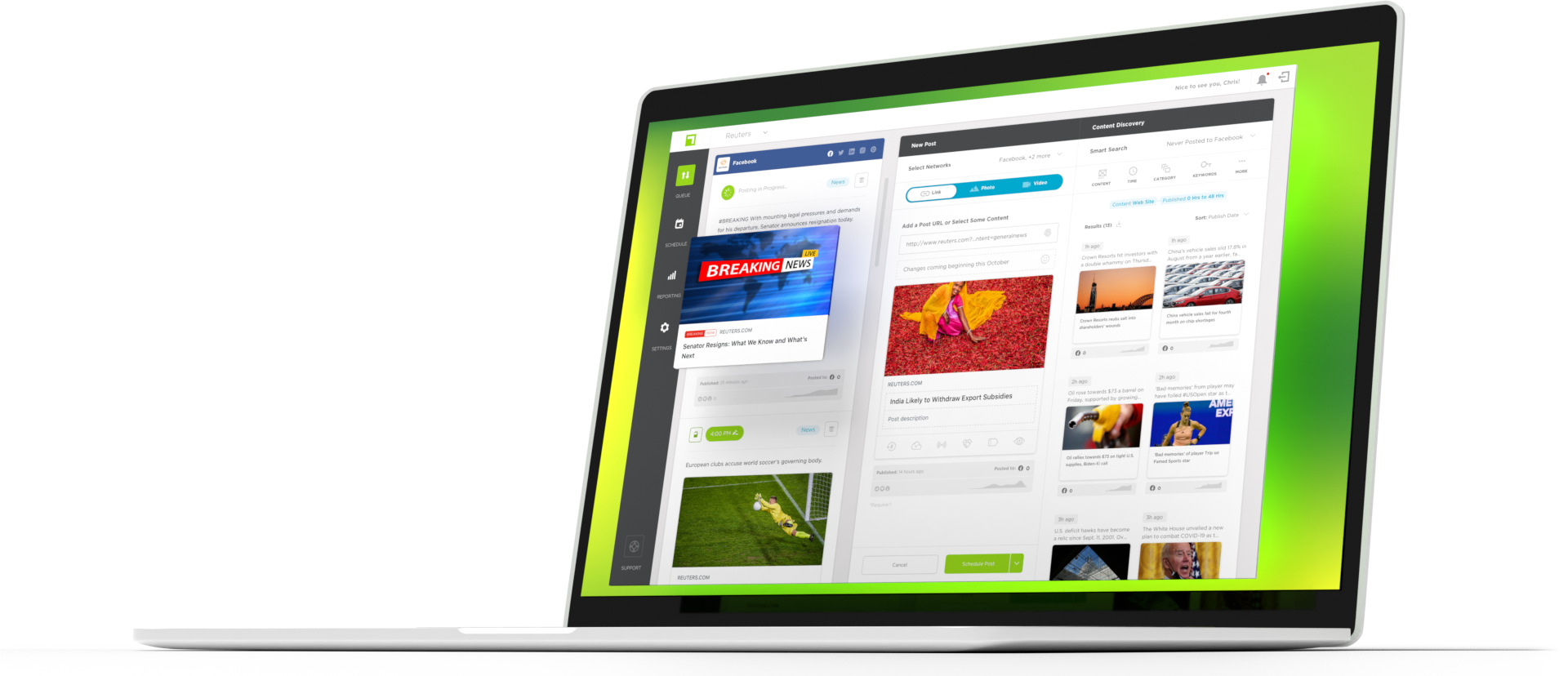
With AI-powered scheduling and strategic support from our Customer Strategy & Insights team, True Anthem helps publishers find their ideal posting rhythm, reaching the right audience at the right time, without doubling the workload. With True Anthem’s automated posting, the smartest posts go out at the right time—automatically. Free your team from the pressure of doing more and start doing what works.
Smarter timing. Better results.